
Faraday Drilling Boosts Arizona Copper Cathode Case
For information only, not financial or investment advice. Do your own research or consult a licensed advisor. Read our disclaimer.
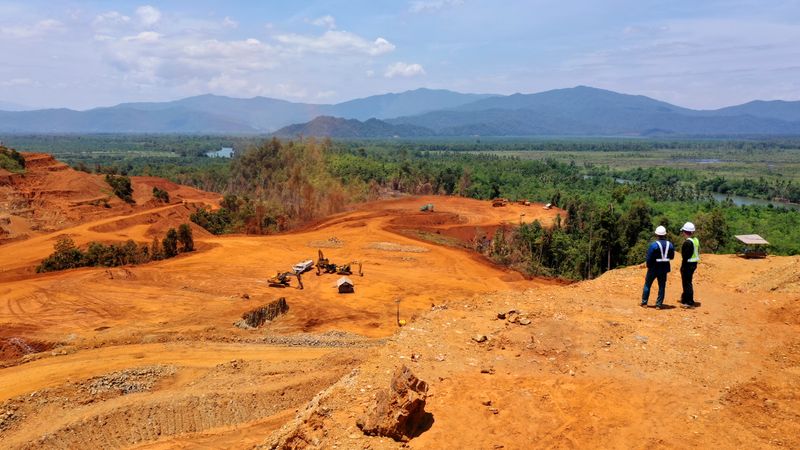
The pursuit of domestic critical mineral supply chains in North America has placed copper assets in the spotlight, and recent developments in Arizona are reinforcing the strategic value of the U.S. Southwest. Faraday Copper Corp. (TSX: FDY; US-OTC: CPPKF) has announced encouraging results from its ongoing exploration and resource-definition drilling at the Copper Creek project, bolstering the technical and commercial viability of a staged development approach. By expanding shallow oxide and sulphide mineralization across key target areas, the company is laying the groundwork for potential near-term copper cathode production while simultaneously integrating a major historical mining district into its overarching regional strategy.
For investors and geologists tracking the evolution of North American copper juniors, these updates offer a clear window into how modern exploration techniques can breathe new life into classic porphyry and breccia districts. As global demand for the red metal accelerates in tandem with electrification and renewable energy infrastructure buildouts, projects capable of phased extraction—starting with low-capex oxide leaching before transitioning to larger-scale sulphide operations—command significant attention. This comprehensive review examines the details of Faraday's latest drill program, the broader implications of the impending San Manuel acquisition, and what these milestones mean for the macroeconomic landscape of the mining sector.
Expanding Shallow Mineralization at Copper Creek
The cornerstone of Faraday’s current operational momentum rests within its flagship Copper Creek project, situated approximately two hours by road southeast of Phoenix, Arizona. Recent assay results released by the company highlight the success of its extensive drilling campaigns, which continue to intercept continuous zones of near-surface mineralization across multiple prospective trends. Specifically, four holes drilled at Copper Giant East successfully intersected near-surface oxide mineralization over intervals spanning roughly 50 to 100 metres. Among these, drill hole FCD-26-190 notably cut 100.8 metres grading 0.22% copper from surface, showcasing the bulk tonnage potential residing right at the top of the profile.
At the American Eagle area, drilling successfully extended sulphide mineralization into a previously untested structural and breccia trend. Most notably, drill hole FCD-26-192 returned 19 metres grading 0.55% copper from a depth of 42 metres, positioned some 350 metres south of the main American Eagle breccia. According to company leadership, these structural intercepts validate predictive geological models that suggest significant room for resource expansion remains open along strike and across parallel trends.
Paul Harbidge, President and CEO of Faraday Copper, emphasized the strategic importance of these findings in a corporate release, noting that the intersection of copper oxide mineralization east of Copper Giant directly enhances the potential for future copper cathode production. Oxide material sitting near the surface is particularly attractive for junior and mid-tier developers because it can often be treated via conventional heap leaching and solvent extraction-electrowinning (SX-EW) circuits. This setup potentially offers a lower initial capital expenditure hurdle and a faster path to cash flow compared to the complex milling and flotation required for deeper primary sulphide ores. With resource-definition drilling now complete for this phase, Faraday plans to feed these new data points into an updated mineral resource estimate scheduled for release next year.
The San Manuel Integration and District-Scale Ambitions
While the ongoing work at Copper Creek remains a primary driver of technical value, Faraday's broader market narrative is being fundamentally transformed by its impending acquisition of BHP’s (ASX, NYSE, LSE: BHP) former San Manuel mine property. Shareholders overwhelmingly approved the stock issuance required for the transaction, with closing anticipated imminently. This strategic consolidation brings together two major historical footprints into a contiguous district-scale package.
The San Manuel property carries a rich operational history. Having started underground production in 1955 before expanding into open-pit and in-situ leaching operations, the historic mine processed roughly 800 million tonnes of material grading 0.66% copper, ultimately yielding more than 4.5 million tonnes of copper before low commodity prices forced a shutdown in 1999. BHP subsequently completed extensive environmental rehabilitation of the site by 2003. Beyond the historic pit and underground workings, the acquisition delivers roughly 109 square kilometres of private land, vital water-supply agreements, and pre-existing access to heavy infrastructure including established roads, rail links, power grids, and natural gas lines right next to Copper Creek.
Faraday's vision for the combined land package involves a multi-staged development concept. By coordinating infrastructure and leveraging shared processing concepts, the company aims to sequence development starting with accessible oxide feed to generate early copper cathode production, subsequently scaling up into larger open-pit and underground sulphide operations. Management has outlined plans to launch an aggressive drill program comprising at least 23,000 metres at San Manuel following the transaction's close. Because historical drill core was largely discarded and remaining resource estimates are classified as historical, this confirmation drilling is a mandatory prerequisite before Faraday can incorporate San Manuel into a unified technical study and an updated combined resource estimate targeted for mid-2027. Company executives have stated publicly that they expect the combined resource to eclipse 18 billion pounds of copper, positioning the consolidated asset as one of the largest undeveloped copper districts in the entire United States.
Market Context, Financing, and the Macroeconomic Landscape
Developing a multi-billion-pound copper district in North America requires robust financial backing and a stable macroeconomic environment. Faraday Copper navigates these waters supported by a formidable shareholder register, including strategic investments from major entities such as the Lundin Family Trusts and BHP Group. This high-tier sponsorship has insulated the company from some of the acute capital-raising pressures typically faced by pre-revenue junior explorers.
Nevertheless, equity valuations for developers remain sensitive to broader macroeconomic currents. Broader financial markets have recently grappled with geopolitical friction, persistent inflationary pressures, and shifting bond yields, all of which contribute to periodic pullbacks across mining indices. For instance, junior and mid-tier developer equities frequently experience heightened volatility during periods of sector-wide cooling, even when company-specific operational milestones—such as successful drill programs—are consistently met. Despite these short-term market oscillations, Faraday’s strong balance sheet and systematic de-risking approach place it in a resilient tier of developers capable of advancing heavy-asset projects through feasibility stages.
From a macroeconomic perspective, the push for domestic copper production within the United States remains a national priority. With domestic consumption heavily reliant on imports and recycled material, bringing large porphyry systems in politically stable, mining-friendly jurisdictions like Arizona into production is critical for long-term supply security. Porphyry copper deposits in the American Southwest are renowned for their massive scale, and while their lower grades require efficient bulk-mining methods, their geographic location minimizes geopolitical transport risks compared to offshore alternatives.
Conclusion
Faraday Copper's latest drill results at Copper Creek validate the company's technical model and reinforce the commercial viability of its phased development strategy. By systematically expanding shallow oxide and sulphide mineralization, the organization is laying a solid foundation for near-term copper cathode production ambitions. Simultaneously, the upcoming integration of the historic San Manuel mine expands the operational horizon into a true district-scale opportunity, aiming for a combined resource exceeding 18 billion pounds of copper. Backed by premier institutional and corporate supporters, Faraday is methodically transforming its Arizona assets into one of the most compelling growth stories in the North American mining sector. As the company executes its upcoming drill campaigns and prepares its next major resource updates, industry observers will be watching closely to see how this ambitious development blueprint unfolds.
Sources and References
- Faraday Copper Corp. Corporate News Releases and Technical Reports (faradaycopper.com)
- S&P Global Market Intelligence - Mining Sector Reports
- United States Geological Survey (USGS) - Copper Mineral Industry Surveys
- Natural Resources Canada - Canadian Minerals and Metals Plan
- The Northern Miner - Industry Coverage and Executive Interviews
Source: Mining.com
How we produced this article
AI-drafted from cited sources and checked by an AI editor before publishing. See How we fact-check.Related stories
Arizona Copper and AI Demand: Resolution Copper's 40-Billion-Pound Case
Arizona copper and AI demand: S&P Global sees copper use up 50% by 2040, and Resolution Copper could supply up to 25% of US demand.
U.S. Launches First New Copper Mine Since 2008 in Florence, Arizona
Florence Copper has officially launched commercial production, marking the first new U.S.

Faraday Sees 18B-Lb Arizona Copper District Following San Manuel Acquisition
Faraday Copper expects confirmation drilling at BHP's former San Manuel mine to support a combined Arizona resource exceeding 18 billion pounds of copper.
All content on Golden Shovel is for informational purposes only and is not financial, investment, or trading advice.