
Canadian Lithium in 2026: E3 Lithium's C$36.5M Federal Deal, Nemaska and James Bay Projects
For information only, not financial or investment advice. Do your own research or consult a licensed advisor. Read our disclaimer.
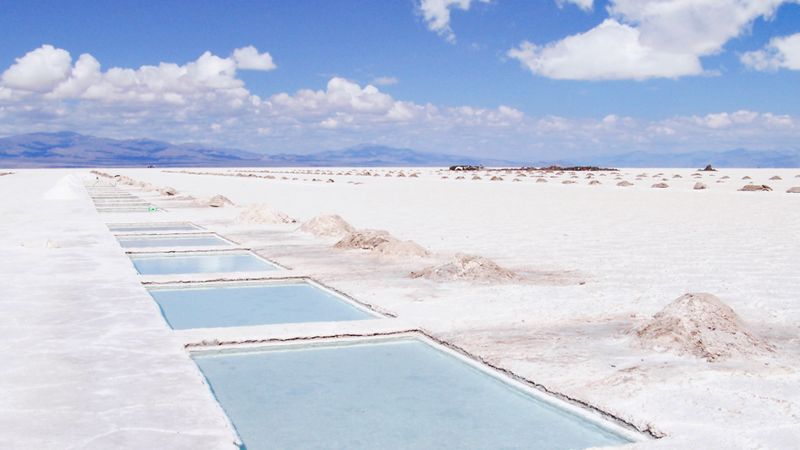
Federal money is flowing to Canadian lithium developers. Calgary-based E3 Lithium Ltd. (TSXV: ETL) has executed a contribution agreement for up to $36,507,091 in non-repayable Natural Resources Canada funding, covering 75% of an approximately $48 million program to finish its Clearwater demonstration facility and feasibility study in Alberta (E3 Lithium). On June 26, 2026, Ottawa announced up to $73 million for 12 mining and infrastructure projects (Natural Resources Canada).
Demand for lithium, used in rechargeable batteries, is driven mainly by electric vehicles and grid storage, and forecasters expect it to keep growing, which is why Canada is pushing to develop new sources.
After a period of oversupply and price correction in 2023-2025, the lithium market has shown a strong recovery. Battery-grade lithium carbonate prices, which hit cyclical lows in 2025, have rebounded since. This recovery is attributed to stronger-than-expected demand, particularly from China's energy storage sector, and tightening supply. Experts like Simon Moores of Benchmark Mineral Intelligence and Joe Lowry of Global Lithium LLC have noted a structural upside for 2026 and beyond, driven by demand that current supply cannot sustainably meet. This positive market sentiment, coupled with geopolitical tailwinds emphasizing secure, Western-aligned supply chains, creates a compelling environment for Canadian lithium companies.
The Canadian Advantage: Government Strategy and Regional Potential
Canada's proactive approach to critical minerals, enshrined in its Critical Minerals Strategy launched in 2022, is a cornerstone of its ambition to become a global leader in the lithium supply chain. This strategy is backed by substantial federal funding, with nearly CAD 4 billion in public investment covering various stages of the value chain, from geoscience and exploration to mineral processing, manufacturing, and recycling. The government's commitment extends to offering tax and non-tax incentives, supporting infrastructure through the First and Last Mile Fund, which builds on the Critical Minerals Infrastructure Fund and has $1.5 billion in federal funding from Budget 2025, and fostering international collaborations (Natural Resources Canada). On June 26, 2026, Canada announced up to $73 million for 12 projects, including up to $51.57 million from the First and Last Mile Fund for five projects and $19.6 million for five mining decarbonization projects (Natural Resources Canada). The Canada Critical Minerals Accelerator (CCMA), introduced in Budget 2025, is designed to catalyze private sector investment and accelerate project development.
Canada's lithium potential is spread across several provinces, each offering unique geological advantages and development opportunities.
Quebec: The James Bay region in Quebec has emerged as a strategic hub for lithium exploration and development. Companies are actively advancing projects, with the region attracting significant mineral exploration investment. For instance, the Shaakichiuwaanaan mining project, a proposed hybrid open-pit and underground lithium mine, is undergoing federal environmental assessment, aiming to produce battery-grade lithium concentrate for North American and international markets. Quebec is also home to Nemaska Lithium, which plans to restart its Whabouchi Mine and build a lithium hydroxide refinery in Bécancour, with a long-term agreement to supply Ford Motor Company. The province's hard-rock pegmatite deposits are a key focus, with new discoveries continually being made, sometimes aided by advanced technologies like AI-powered satellites.
Manitoba: Manitoba is rapidly gaining recognition for its lithium potential, particularly in the Winnipeg River–Cat Lake pegmatite field, which hosts the world-class Tanco lithium-cesium-tantalum deposit. The Manitoba Geological Survey is actively working to improve the understanding of the province's lithium resources, which include both magmatic deposits (pegmatite) and potential lithium-bearing brines in the Williston Basin. The province's supportive government is attracting explorers, and companies like New Age Metals are major claim holders in prolific areas, with exploration funded by global lithium producers.
Alberta: Alberta presents a unique opportunity with its vast, newly discovered lithium resources in oil and gas reservoirs, offering the potential to produce lithium without traditional hard-rock mining through Direct Lithium Extraction (DLE) technologies. This method leverages existing oil and gas infrastructure and expertise, potentially offering a more environmentally sustainable approach to lithium production. E3 Lithium, a Canadian development company, is advancing lithium projects in Alberta, having outlined significant measured and indicated lithium carbonate equivalent resources. The company's Clearwater project has proven and probable reserves and has successfully delivered battery-grade lithium carbonate from its demonstration program. E3 Lithium received conditional approval for up to C$36.5 million in federal funding on March 2, 2026 and has since signed the contribution agreement; the money is retroactive to April 1, 2026 (E3 Lithium).
Ontario: Ontario is also emerging as a key player, with rich lithium deposits positioning the province as a strategic opportunity for investors. The province offers a combination of world-class geology, supportive government policy, and existing infrastructure, which helps reduce development risk and accelerate project timelines. Exploration companies are active in the region, with projects like the Zigzag Project highlighting high-grade lithium discoveries in proven districts.
Investment Opportunities and Market Dynamics
For investors, the Canadian lithium sector in 2026 presents a compelling, albeit selective, opportunity. The rebound in lithium prices and the robust long-term demand forecast create a favorable environment for high-quality Canadian lithium stocks. Lithium prices remain volatile, so project funding, permits and offtake agreements matter more than headlines when judging individual companies.
Sources
- E3 Lithium: Executes contribution agreement underpinning up to $36.5 million in federal support (June 2026)
- Natural Resources Canada: Minister Hodgson accelerates Canada's mining sector (June 26, 2026)
For more coverage, see the lithium hub, Canada articles and company profiles.
How we checked this: AI-edited from the sources linked above and checked against them by our AI editor.
How we produced this article
AI-drafted from cited sources and checked by an AI editor before publishing. See How we fact-check.Related stories
Top 3 Canadian Lithium Stocks in 2026: Navigating the Rebound of White Gold
As the global lithium market begins to rebalance in 2026, Canadian explorers and developers are capturing investor interest.

Top 3 Canadian Lithium Stocks in 2026: Market Recovery and Opportunities
Discover the top three Canadian lithium stocks driving the sector's recovery in 2026.

Elevra Lithium Shares Down 75% From May Peak: What Happened at North American Lithium and in the Lithium Price
Elevra Lithium shares have fallen about 75% since May 2026.
All content on Golden Shovel is for informational purposes only and is not financial, investment, or trading advice.